Online Quran Classes for Kids
The first class doesn’t have to cover a whole page. A child who notices the difference between two letter sounds has learned something they can use again. Tell us what your child can already read and what they usually find hard, so the tutor can choose a manageable start.

Start with your child’s level
Quran reading
If they already read joined words, bring a familiar passage so the teacher can check fluency and pronunciation.
Memorisation
For a child interested in memorising, ask how revision will fit around school and the rest of the week.
What parents can do
Help with the device and make sure the lesson time is one the child can usually keep. Ask how parent participation works before the class. Afterward, ask what your child could read without help and what they can practise in a short sitting.
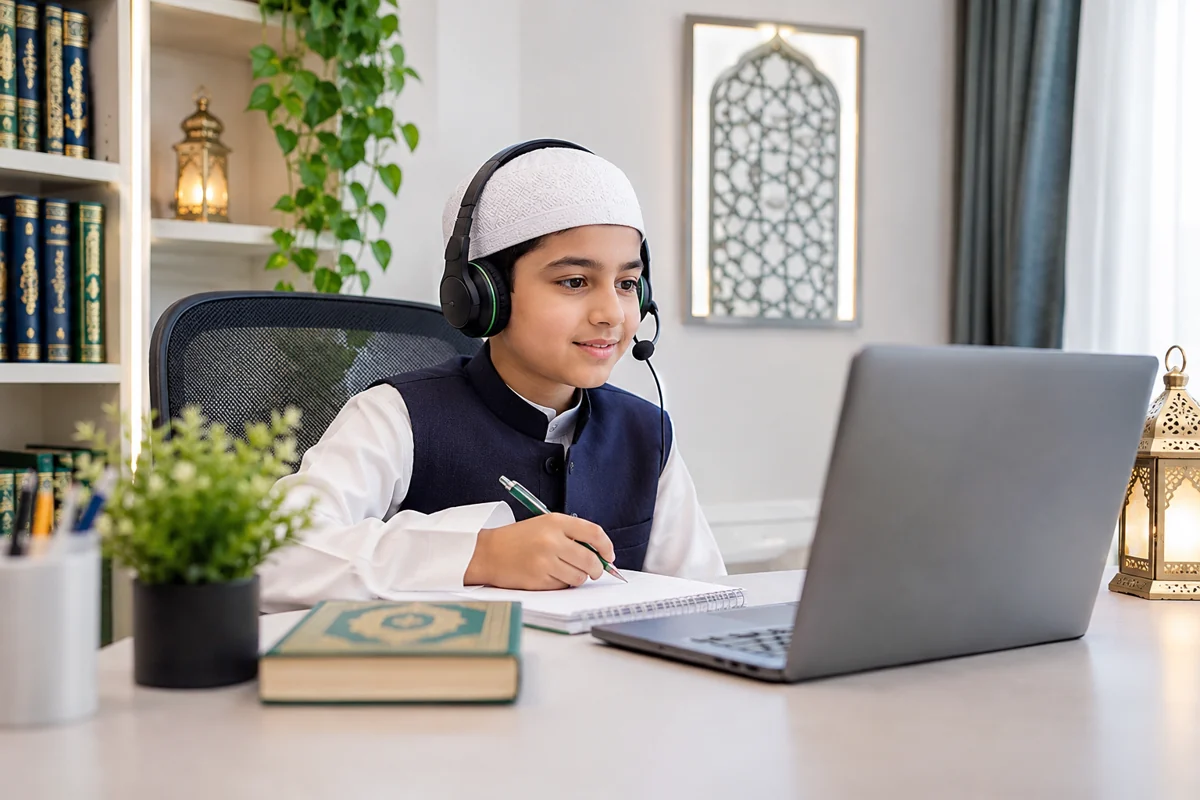
Give the child time to try
When the tutor pauses for an answer, try not to supply it straight away. A few seconds of thinking tells the tutor which part the child can work out independently. If they become tired or distracted, ask whether it makes sense to change the amount of material rather than counting completed pages.
Discuss your learning goals
Tell us what your child can read and what a calm lesson time looks like at home.
Frequently Asked Questions
Is there a set starting age?
Share your child’s age group and how they manage short guided activities. Ask the academy to confirm whether the setup suits them.
Can a parent observe the first class?
Ask before the appointment and agree how the parent will join.
What if my child is shy about reading aloud?
Tell the teacher. A short familiar exercise can make the first attempt more comfortable.
How will I know what to practise?
Ask the tutor for one example and one correction to repeat.
Find a comfortable start for your child.
Tell us what your child can read and what a calm lesson time looks like at home.